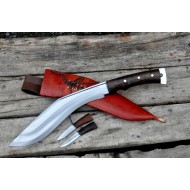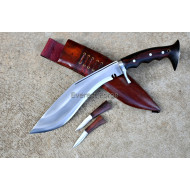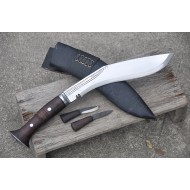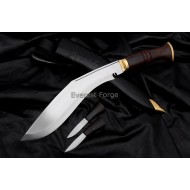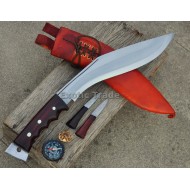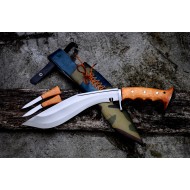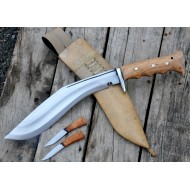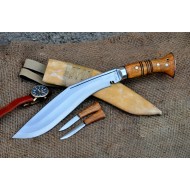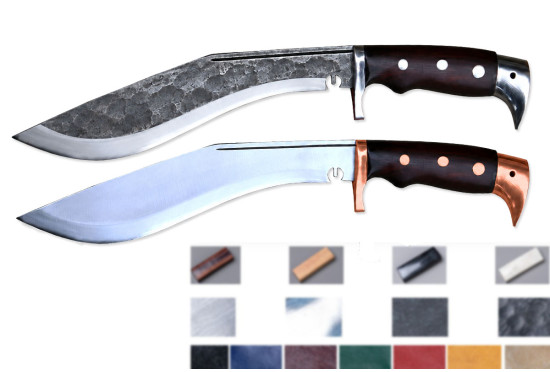
- Model: Hybrid Kukri/Khukuri
- Product Code: AEKOWN010
- Location: Kathmandu,Nepal
Available Options
A Hand-Forged Eagle Pommel Kukri/Khukuri, Built the Way You Want It
Choose the blade finish, the handle, the fittings, the scabbard colour, the chape and whether to add the karda and chakmak, then add your engraving — and we forge that exact khukuri. Every selection updates the preview on screen. There are 8,400 possible builds before personalisation, the widest choice on our builder, and each one is a piece our smiths in Kathmandu make routinely.
Underneath every combination is the same blade and the same signature: 10 inches of hand-forged 5160 spring steel in the forward-curving kukri/khukuri profile, on a full tang, finished at the butt with a hand-carved eagle head. Nothing else we make is carved like it, and the carving is cut by hand into whichever handle material you choose, so no two are identical.
Your Choices
Blade length and construction are fixed on this pattern. For anything outside these options, use our custom forge service.
The Carved Eagle Pommel
Carved pommels are an old strand of Nepali blade work. Ceremonial and presentation khukuris have long been finished with carved heads, floral work and inlay, and the skill sits with the same craftsmen who shape plain working grips — it is the same hand, taking longer. The eagle head at the butt of this khukuri comes out of that tradition even though the bird does not: it is our own design, cut freehand rather than moulded, pressed or machined.
Because the carving is freehand, the material changes the result. Rosewood takes the deepest, cleanest detail and is the standard build. Buffalo horn gives the most dramatic eagle, glossy black with the grain running through the head. Bone reads closest to ivory scrimshaw and is the most collector-facing. Whitewood gives the brightest, plainest bird. On the two-material grips, the pommel end takes the second material, so the eagle can stand in a contrasting colour from the rest of the handle. Small differences between one carving and the next are the point, not a flaw.
It also has a practical side. A flared, sculpted butt is what stops the hand sliding off a khukuri under a hard chop, and the eagle head does that job while looking like nothing else on a shelf.
Which Blade Finish Suits It?
Fittings, Scabbard and Chape
The fittings come in silver-tone, a bright white metal that stays bright longest, brass, warm gold and the classic partner for rosewood, copper, warmer and quickest to darken, or black, the quietest match for a black coated blade.
Every scabbard is a traditional dap: a carved wooden core shaped to the blade, wrapped in buffalo leather, in six colours. The chape is the metal tip that protects the end of the scabbard, and on this build it is optional — choose one of the four metals, or choose No for a plain leather tip, which is the simpler village look. Matching the chape to the fittings gives a unified, presentation finish; contrasting them, or leaving the chape off entirely, keeps the eye on the carved pommel.
Karda, Chakmak and Engraving
Choose Yes for the karda and chakmak and two companion pieces ride in pockets on the back of the scabbard. The karda is a small utility knife for fine work such as carving, skinning and food preparation. The chakmak is a blunt, hardened steel for burnishing and straightening the edge in the field. Choose No for a lighter, simpler carry.
The personalisation field takes a name, initials, a date or a short line, and you can upload a crest, an insignia, a logo or a photograph for us to reproduce. On a carved piece this matters: an eagle pommel with a name and a date on the blade is the version people buy for retirements, anniversaries and presentations.
Want a Carving We Do Not List Here?
A different animal or bird at the pommel, a longer or shorter blade, carving along the handle, silver fittings or a full presentation build — anything outside this option list goes through our custom forge service, where we quote your design individually.
Request a Custom Forge →Why This Khukuri Works
Standard Build Specification
Blade, handle and overall length are fixed on this pattern and do not change with your selections. Because every piece is hand-forged and every pommel hand-carved, small differences in the carving, the grain and the finish are normal and are part of what you are buying.
An Honest Note on This Khukuri
An honest note. Three things worth saying plainly. First, the eagle is carved freehand by the smith who makes your khukuri, so the one you receive will differ in small ways from the one in the photographs — sharper here, softer there. If you want an identical copy of a particular carving, we cannot promise it. Second, this is as much a presentation piece as a working blade: it will chop and clear like any 10-inch khukuri, but a carved pommel is worth protecting, and most owners keep it for lighter work and display. For a hard-use chopper, our configurable survival khukuri or Defender are better suited. Third, the silver-tone fittings are a bright white metal, not sterling silver, and 5160 is not stainless: keep the blade lightly oiled and the carving away from direct heat.
This Eagle Khukuri Suits
- Collectors who want a carved khukuri rather than another plain one
- Retirement, service and presentation gifts, with a name engraved
- Display in a room, on the optional stand
- Anyone who wants to choose every finish and fitting themselves
Look Elsewhere If
- You want a hard-use chopper — see the configurable Defender or survival khukuri
- You want a guaranteed identical copy of a photographed carving
- You want a light blade for all-day carry — see the configurable EDC khukuri
- You want a stainless blade that tolerates neglect
How Your Order Is Made
Caring for a Carved Khukuri
Wipe the blade dry after use and keep a light film of oil on the steel in storage. Do not leave the khukuri in its scabbard for long periods, because the leather and wooden core hold moisture against the steel. The carving needs its own attention: give a timber pommel a little oil once or twice a year, keep horn and bone away from radiators, direct sun and car interiors, and clean the detail with a soft dry brush rather than picking at it. When you sheathe the khukuri, put it in first and the karda and chakmak in last. Our kukri/khukuri maintenance guide covers sharpening and storage in more detail.
Shipping, Returns and Warranty
Every piece is prepared at the forge in seven to ten days, and shipping adds a further seven to ten days. Orders to the USA and Canada travel with FedEx; everywhere else ships on a DDP service, which means duties and taxes are settled before the parcel moves so there is nothing to pay on delivery. Every piece carries the Everest Forge manufacturer warranty against defects in forging and heat treatment. Because a configured khukuri is made to your specification, it falls outside our standard returns window except where the blade is faulty — full terms are on our shipping and returns page. Import rules on edged blades vary by country and are the buyer's responsibility to check before ordering.
Explore More Everest Forge Blades
Questions About the Eagle Pommel Kukri/Khukuri
Is the eagle pommel carved or moulded?
Carved, freehand, by the craftsman who makes your khukuri. It is cut into the solid handle material rather than moulded, pressed or fitted as a separate cap. That is why the carving differs slightly from one khukuri to the next, and why the material you choose changes how the finished eagle looks.
Which handle material gives the best carving?
Rosewood takes the deepest, cleanest detail and is our standard. Buffalo horn gives the most dramatic result, glossy black with the grain running through the head. Bone is the brightest, closest to scrimshaw, and the most collector-facing. Whitewood is the plainest and palest. On a two-material grip the pommel end takes the second material, so the eagle can stand in a contrasting colour.
Is a carved pommel traditional on a khukuri?
Carving is. Ceremonial and presentation khukuris in Nepal have long carried carved heads, floral work and inlay, cut by the same craftsmen who shape plain working grips. The eagle itself is our own design rather than a traditional Nepali motif, and we would rather say so than dress it up as folklore.
Does the carving weaken the handle?
No. The carving is at the butt, where a khukuri handle is already flared and where no cutting load passes, and the steel tang runs the full length of the grip underneath it. A flared, sculpted butt is in fact what stops the hand sliding off under a hard chop, so the eagle does the same job as a plain flared pommel.
Should I add the chape or leave it off?
Add it for a finished, presentation look, and match the metal to the fittings for the most unified build. Leave it off for the plain leather tip, which is the simpler village look and keeps the eye on the carved pommel. It is the only build on our site where the chape is genuinely optional.
What are the karda and chakmak?
The two companion pieces carried in pockets on the back of a khukuri scabbard. The karda is a small utility knife for fine work such as carving, skinning and food preparation. The chakmak is a blunt, hardened steel for burnishing and straightening the edge in the field. Add them for the traditional full set, or leave them out for a slimmer scabbard.
Can it be used, or is it a display piece?
Both, honestly. It is a real working khukuri: forged 5160, full tang, sharpened, and 10 inches of blade will chop and clear. But a hand-carved pommel is worth protecting, and most owners use it lightly and display it. For genuinely hard use, our configurable Defender or survival khukuri are the better buys.
Will my eagle look exactly like the photograph?
Close, but not identical. Every pommel is carved by hand, so the set of the eye, the depth of the feathers and the line of the beak vary a little between pieces. That is the nature of hand carving. If you need an exact reproduction of a specific carving, ask through custom forge and we will tell you honestly what is possible.
Can I have a name or crest engraved as well?
Yes. Type the text into the personalisation field, or upload a crest, insignia, logo or photograph for us to reproduce. A carved eagle with a name and a date is the build most people order for retirements, anniversaries and presentations.
How do I look after the carving?
Give a timber pommel a little oil once or twice a year. Keep horn and bone away from radiators, direct sunlight and hot cars, since all three dry natural materials out and can raise fine checks. Clean the detail with a soft dry brush, not a pick, and do not soak the handle when you wash the blade.
Will 5160 steel rust?
Yes, if you let it. 5160 is a high-carbon spring steel, not stainless, and that is a deliberate trade: it is far tougher and takes a better working edge than stainless steels in this class. Wipe it dry after use, keep a light film of oil on it and do not leave it in the scabbard for months. Black coated and acid wash reduce the upkeep.
Can I order a different carving, size or a left-handed build?
Left-handed is easy: write "Left Handed" in the order note and the forge will take care of the rest. A different animal at the pommel, carving along the handle, another blade length or a full presentation build goes through our custom forge service, where we quote your design individually.
-190x190w.jpg "Official Issue BSI Service No.1 Kukri / Khukuri – British Gurkha Standard Issue")