Leaf-Shaped Bronze Sword Replicas, Forged in High-Carbon Steel
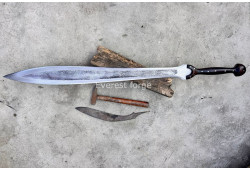
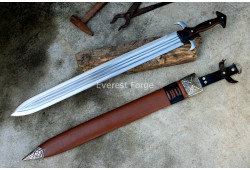
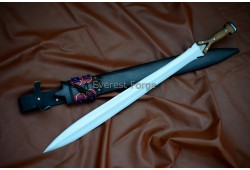
The Bronze Age gave the world its first true swords — long before iron, warriors of Mycenaean Greece, the Hittite empire, Egypt and the wider Mediterranean carried leaf-shaped blades that were tools, status symbols and ritual objects in one. This collection from Everest Forge revives those forms: the wide-bellied, double-tapered leaf blade and the iconic Naue II profile, hand-forged one at a time by smiths in Tokha, Kathmandu.
Every blade here is a working reproduction of an ancient shape — not an antique, and not cast bronze. We forge each one from 5160 high-carbon spring steel, full-tang, heat-treated and sharpened, so the silhouette is faithful to the originals while the steel is far stronger than the bronze it imitates.
An honest note on the metal. These are steel swords in a Bronze Age form. We forge them from 5160 spring steel because it holds an edge and survives real cutting practice in a way cast bronze never could. If you want a museum-correct bronze casting, this collection is not that — what you get is the shape, balance and presence of a Bronze Age leaf blade in a blade you can actually use.
Hand-forged in Nepal
5160 spring steel
Full-tang construction
Sharpened & heat-treated
DDP — duties prepaid
Custom forge available
Why These Bronze Age Swords Stand Apart
Forged, not cast
Each blade is hammer-forged and ground by hand, then heat-treated — the way a working blade is made, not poured into a decorative mould.
5160 spring steel
The same high-carbon steel used for working choppers, chosen for toughness and edge retention well beyond historical bronze.
True leaf geometry
Wide through the belly, tapering at both ends — the profile that gave Bronze Age blades their cutting authority.
Full-tang build
Tang running the length of the grip for strength and balance, so the sword handles like a tool rather than a wall piece.
Naue II lineage
Several pieces follow the Naue Type II pattern that spread across Europe and the Mediterranean after 1300 BCE.
Made where it is forged
Forged in our own workshop in Kathmandu, not white-labelled — you can request changes before we start.
The Bronze Age Blade, by Type
Bronze Age sword is a broad term covering several distinct lineages. Here is how the shapes in this collection relate to the originals.
Naue II (Naue Type II)
The first truly pan-European sword pattern, with a leaf-shaped blade and a flanged grip cast or forged in one piece with the tang. It appeared around 1300 BCE and was carried from the Aegean to Scandinavia — the closest thing the Bronze Age had to a standard-issue blade.
Mycenaean & Aegean leaf blades
The swords of Mycenaean Greece — Homer's heroes — ran from long thrusting rapiers to broad leaf-shaped cut-and-thrust blades. Their wide bellies made them as effective in the cut as in the point.
Hittite & Near-Eastern forms
The Hittites and their neighbours forged both straight and curved bronze blades. The straight leaf forms sit comfortably alongside the Aegean swords in shape and purpose.
The classic leaf-shaped sword
Across cultures the leaf shape recurs because it works: mass concentrated forward of centre for the cut, a tapering point for the thrust, and an organic handle of wood, horn or bone. Our blades keep that geometry in steel.
The Complete Bronze Age Sword Collection
Hand-Forged vs. Decorative Wall-Hanger
Most "bronze age swords" sold online are decorative castings — soft metal or stainless blanks with rat-tail tangs, made to hang on a wall and nothing more. These are different.
An Everest Forge leaf blade
- Hand-forged 5160 high-carbon spring steel
- Full-tang, heat-treated and sharpened
- Built to take cutting practice and reenactment handling
- Made to order, with custom options before forging
A typical wall-hanger
- Cast or stamped soft metal, often stainless
- Partial or rat-tail tang that can fail under load
- Display only — not made to be swung
- One fixed factory version, no input from you
Who These Swords Are For
Collectors
For anyone building a collection around the dawn of metal weaponry — a forged steel piece that reads as a Bronze Age blade on the rack.
Reenactors & living history
For Bronze Age and early-antiquity portrayals that need a blade with the right silhouette and real structural integrity.
Cutting-practice enthusiasts
For those who want to feel how a leaf blade moves — the forward weight and the cut — in a sword that can take it.
How Each Blade Is Made
1Steel selection
We start from 5160 high-carbon spring steel — tough, springy and forgiving of hard use.
2Hand-forging
The bar is heated and hammered to the leaf profile, drawing out the belly and the double taper by eye and hand.
3Heat treatment
The blade is hardened and tempered for a working balance of edge retention and toughness.
4Grind, fit & finish
We grind and sharpen the edge, then fit and finish the handle — wood, horn or bone in keeping with the period.
Want a specific length, a different handle material, or an etched motif? Every Bronze Age form here can be built to your spec.
Start a Custom Forge →
Shipping, Returns & Warranty
Shipping is DDP — duties and taxes prepaid. The price you pay at checkout includes import duties and taxes to your country, so there is nothing to settle on delivery. Each sword is made to order and forged before it ships; handling and forging time is shown on the individual product page.
Every blade is covered against defects in forging and heat treatment. If a sword arrives with a genuine fault, contact us and we will make it right. Returns follow our standard shipping and returns policy.
Caring for a High-Carbon Steel Blade
5160 is high-carbon steel, so it will rust if neglected. Keep the blade lightly oiled, wipe it down after handling, and store it dry — never sealed in a damp scabbard for long periods. A few minutes of care keeps a forged blade sound for generations.
Explore the four hand-forged leaf blades in this collection, or commission your own Bronze Age sword from scratch.
Request a Custom Forge →
Bronze Age Swords — Frequently Asked Questions
Are Everest Forge Bronze Age swords made of real bronze?
No — and we are upfront about that. Each sword is forged from 5160 high-carbon spring steel in the shape of a Bronze Age leaf blade. We use steel because it is far tougher than cast bronze and can take real cutting practice. You get the authentic form and balance, not a fragile bronze casting.
What is a Naue II sword?
The Naue Type II is the most influential Bronze Age sword pattern — a leaf-shaped blade with a one-piece flanged grip, first appearing around 1300 BCE and spreading from the Aegean across Europe. Several blades in this collection follow that lineage.
What is the difference between a leaf-shaped sword and a straight sword?
A leaf-shaped blade is wide through the centre and tapers toward both the hilt and the point, concentrating mass forward for powerful cuts while keeping a usable thrusting tip. A straight blade keeps an even width and favours the thrust. The Bronze Age leaf form is the signature shape of this collection.
Are these bronze age swords sharp and functional?
Yes. Each blade is heat-treated and sharpened, with a full-tang build for strength. They are made for cutting practice, reenactment handling and display — not as soft display castings.
Which ancient cultures used bronze age swords?
Bronze leaf and Naue II swords were carried by Mycenaean Greeks, Hittites, and peoples across the Mediterranean, Near East and Europe from roughly 1600 to 1200 BCE. Each region adapted the form to its own metalwork and burial customs.
How long are your Bronze Age swords?
Length varies by model, and on several pieces it is a choice you make when ordering. Check the individual product page for the available blade lengths and overall dimensions of each sword.
Are these good for cutting practice or reenactment?
Yes — that is exactly what they are built for. The 5160 steel, full-tang construction and proper heat treatment mean these leaf blades stand up to controlled cutting and living-history handling far better than a decorative replica.
Can I order a custom Bronze Age sword?
Yes. Through our Custom Forge service you can specify blade length, handle material, fuller and etching, and we will forge a one-off Bronze Age leaf sword to your specification.
How are these different from your Celtic Leaf and La Tène swords?
This collection focuses on the cast-and-leaf forms of the Bronze Age — Naue II, Mycenaean and Hittite shapes. Our Celtic Leaf and La Tène collections cover the later Iron Age Celtic blades, which use different, mostly straight iron-age geometry. If you want the early metal-age leaf shape, this is the right collection.
Does each sword come with a scabbard?
Scabbard inclusion varies by model — some ship with a wood-and-leather scabbard, others do not. The individual product page lists exactly what is included with that sword.
How do I care for the blade?
Keep it lightly oiled, wipe it dry after handling, and store it in a dry place rather than sealed in a damp scabbard. High-carbon steel rewards a little routine care with a lifetime of service.
Do you ship internationally, including to the United States?
Yes. We ship worldwide on a DDP basis, meaning duties and taxes are prepaid at checkout and nothing is owed on delivery. Forging and handling time for each made-to-order sword is shown on its product page.


-250x170w.jpg "Bronze Age Sword Replica — Hand-Forged Leaf Blade with Round Pommel")